The enduring bond between Northern Soul and scooters… Stu Smith reports.
Outside Northern Soul venues in the mid-1970s, the scene was as much about scooters as it was about vinyl. Outside rows of scooters parked under the sodium streetlights, whilst their riders were inside for an all-nighter where rare 45s spun until dawn, and the
scooters were as much a part of the performance as the backflips on the floor inside. As one dancer recalled, “Scooters and soul music belong together; they’re both part of the same revolution…”
Enjoy more Scootering Magazine reading every month.
Click here to subscribe & save.

So what was the connection between the music and the machines? Why did the soundtrack of Britain’s Northern Soul clubs become blended with scooters? The answer is a story of working-class rebellion, freedom and style.
Escape
To understand the bond, you have to start with the Mods of the early 1960s. In drab post-war Britain, young working-class kids sought sophistication and escape. They dressed sharp, listened to present Mod and R&B music, and crucially, they rode scooters. Scooters were affordable, stylish, and a form of practical transport, which could be turned into works of art. They were also symbols of continental flair in an otherwise grey landscape. For many Mods, scooters were their first taste of freedom. At the same time, some of the music that moved them was imported American soul. By the late ’60s, as Motown went mainstream, DJs and dancers in the north began chasing something rarer and faster. This became Northern Soul; obscure, pounding and deeply addictive.
All-Nighter Highway
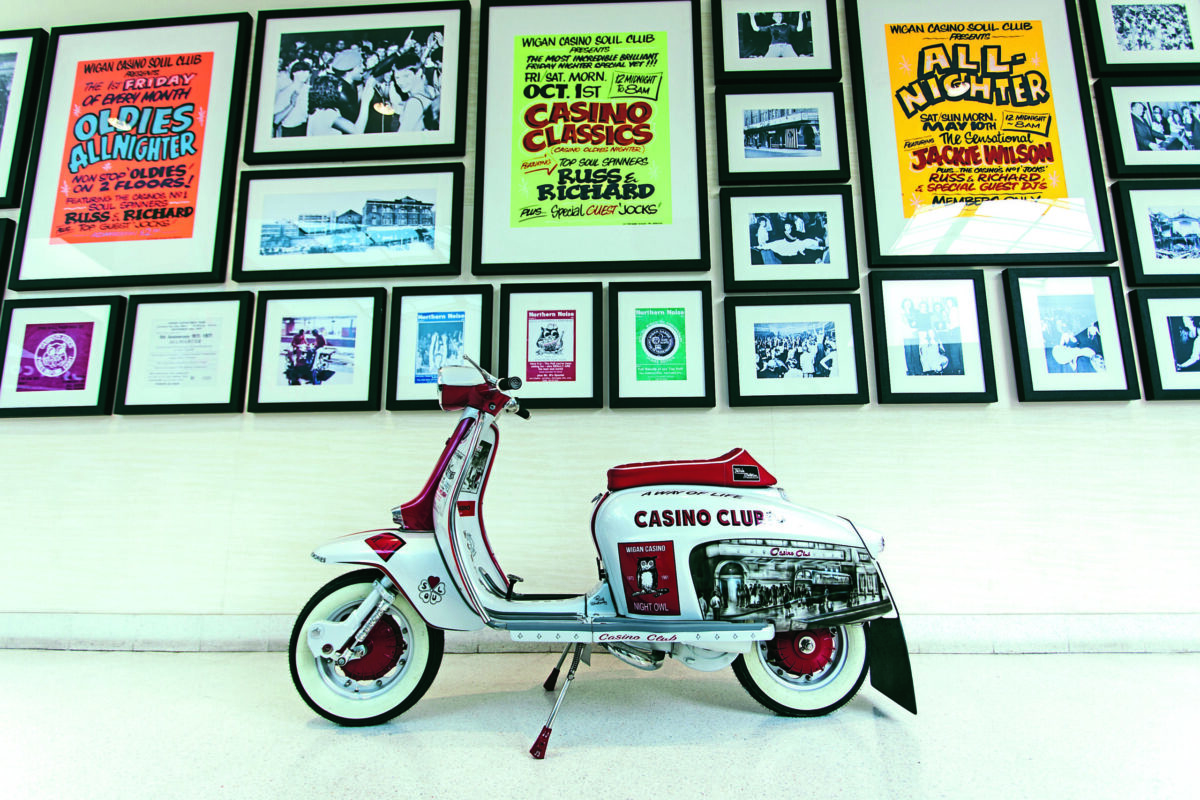
Within that, the scooter’s role wasn’t just symbolic. To get to the main Northern Soul venues such as Wigan Casino, Blackpool Mecca and the Twisted Wheel in Manchester, fans often travelled for hours on their machines, carrying themselves across counties to dance until dawn. A 1970s media report captured the feeling perfectly: “The all-nighter doesn’t end when the lights go up, it carries on down the motorway at 5am with Northern Soul scooterists riding home in the half-light with the music still ringing in their ears.”

Identity
Northern Soul dancing and scooters were both about display and individuality. The clothes you wore and the machine you rode told people exactly who you were and where you belonged. Half a century later, the connection still endures, scooter rallies across the UK still feature Northern Soul DJs and Soul all-nighters often see rows of scooters parked outside. Both scenes have successfully survived because they speak with the same desires: freedom, belonging and the thrill of stepping away from the mainstream.

Stu says: Northern Soul and scooters are two sides of the same story, and together, having grown from the same working-class urge to escape, express and belong, they’ve developed a culture that decades later still moves, driven by style, purpose and individuality.

Words: Stu Smith Photos: Gary Chapman
Article originally appeared in Scootering Magazine September 2025 issue. To subscribe and grab some Meguiars cleaning freebies visit https://classicmagazines.co.uk/scootering?offer=SCOME2026