
The internet has transformed almost every aspect of modern life — and the scooter scene is no exception. While instant access to information has made it easier than ever to buy parts, find events and view custom builds, it has also fundamentally changed how scooterists communicate and experience the scene.
Today, rally dates, event locations, parts availability and custom builds can all be discovered instantly from a smartphone. Riders can spend hours messaging, scrolling and watching content without speaking a word. This isn’t a criticism of technology itself, but an observation of how digital communication has reshaped the scooter world over the past 25 years.
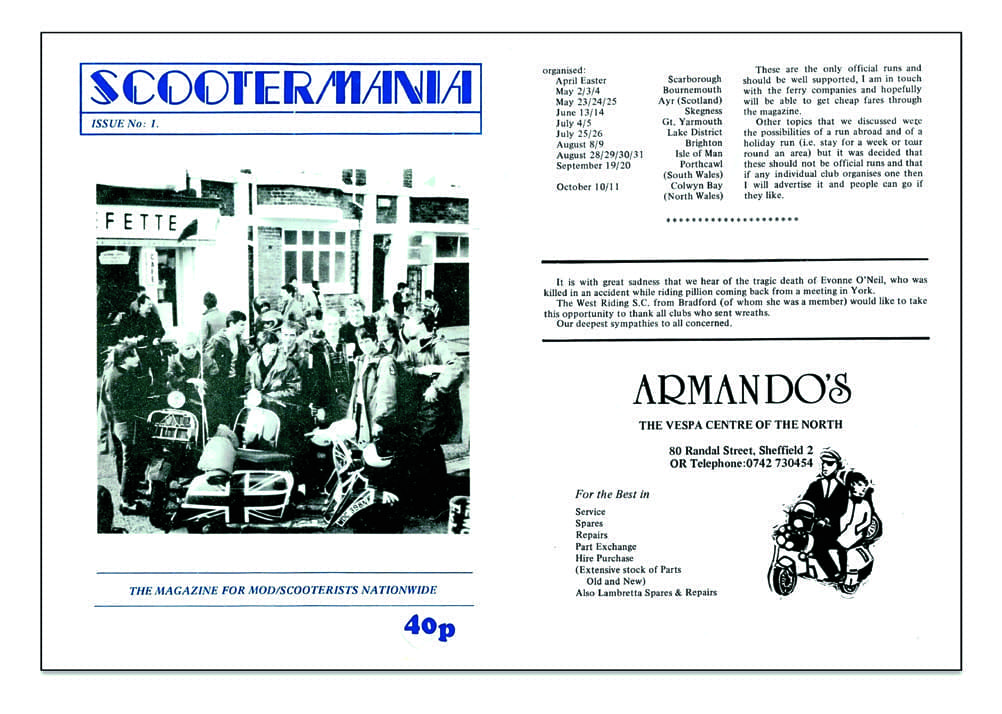
Before the internet, information travelled differently. Rally dates were found in magazines such as Scootermania, Jet Set from the LCGB, and Scooter & Scooterist. Even without formal advertising, word of mouth ensured events attracted crowds in the thousands. Publication schedules were loose by modern standards, yet the information arrived when it mattered.
Enjoy more Scootering Magazine reading every month.
Click here to subscribe & save.
Scooter shops played a central role as physical information hubs. Saturdays were especially important, with riders gathering not just to buy parts but to talk, learn and share ideas. It was common for scooters to be stripped down outside shops, with clutches changed, engines inspected and advice freely offered. These moments provided real, first-hand learning that shaped the community.
Rumours and stories spread at these gatherings, often embellished with each retelling. Some were fanciful, others proved accurate. One famous example was the launch of the TS1, which generated huge anticipation after first appearing in the press. When Ray Kemp finally demonstrated it at AF Rayspeed, large crowds gathered to witness the moment — the result of weeks of conversation, speculation and excitement.
In contrast, modern events and builds are often fully documented online before they happen. Social media posts show scooters at fuel stations en route to rallies, followed by thousands of images once the event is underway. Custom builds and engine projects are shared step by step, leaving little left to unveil in person.
Events are now advertised months in advance, which is practical, but constant exposure can reduce impact. This isn’t the fault of individuals, but a consequence of an information-driven culture built on instant access and continuous updates.
More significantly, there has been a shift away from face-to-face conversation. Where riders once talked, debated and learned together, much of that interaction now takes place through typed messages and posts, often skimmed rather than fully read.
The evolution from forums to YouTube and social media promised unprecedented connectivity, and in many ways delivered it. Yet for some, the older scene — built on surprise, shared discovery and real-world interaction — remains the most memorable.
To subscribe to Scootering Magazine please click here